Darren Talbot’s Journey into Inclusive Cricket Part 8
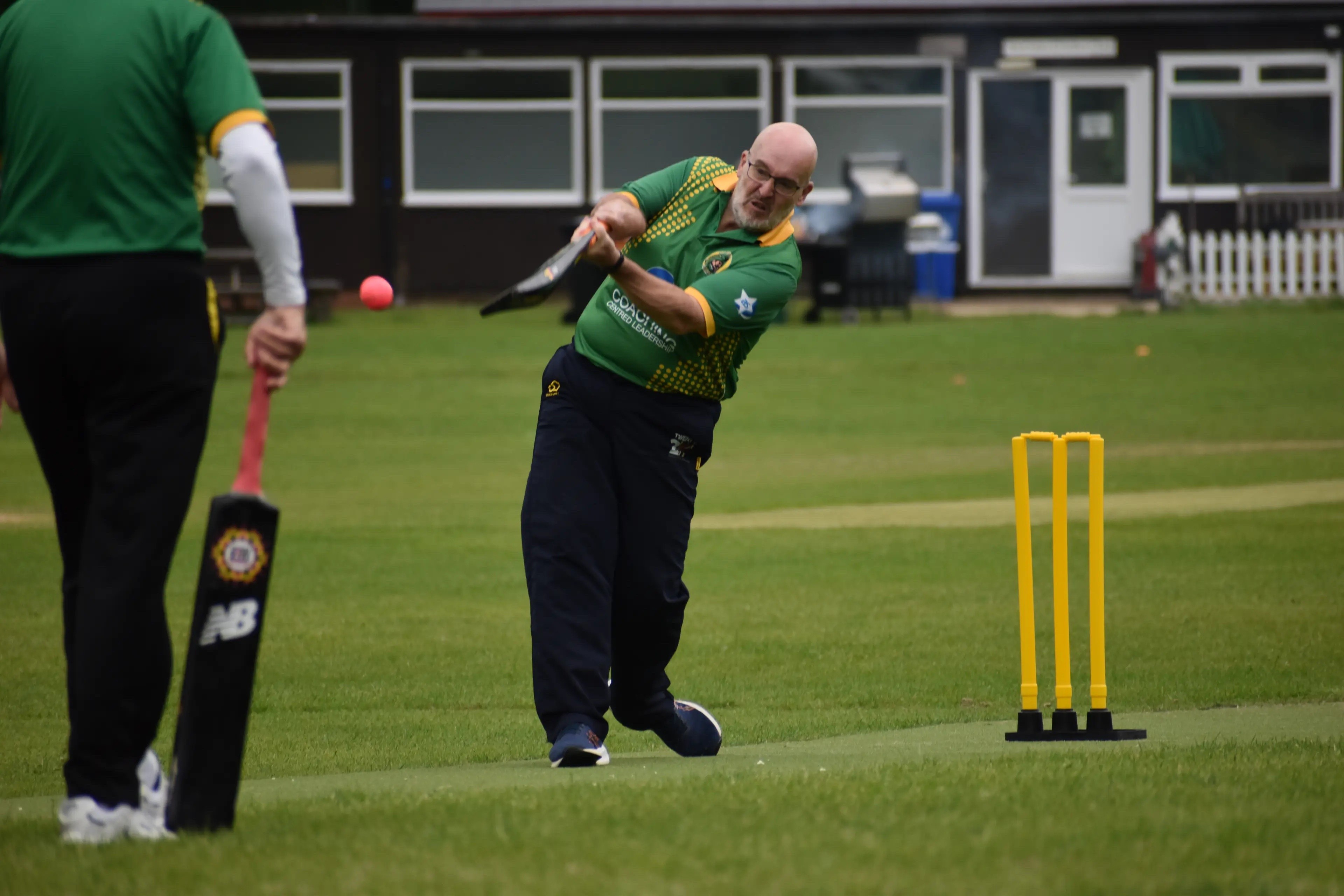
Darren Talbot is a pioneer of Walking Cricket in the UK. Here he relates what inspired him to develop the game, and where it is now…
Walking Football had really taken off across the country, but it was whilst watching a BBC Breakfast News feature on walking basketball in 2014 that I suddenly started wondering about walking cricket. I realised what a good idea it was and after some research discovered that no one else seemed to be doing it.
It felt like the perfect game to tackle issues like social isolation and inclusion for an age group that is often unprioritised. This was also a time when I didn’t really want to play hard ball cricket anymore - I didn’t want to spend my Sunday afternoons facing 17-year-old bowlers trying to take my head off and was open to a calmer alternative.
How could it work? I thought that the Under 8s, plastic bat, pairs batting format might work and arranged some sessions in Woking to try it out. I also set up taster sessions with the Barnet Walking Footballers who were excellent at feeding back to me what could be improved with the cricket version.
We gradually tweaked the rules: the boundary was brought in, and the pitch reduced to 17 yards; to encourage movement rather than slogging, if you hit a boundary between extra cover and midwicket you score a 2, but this doubles to a 4 if you cross before the balls goes over the boundary. Underarm bowling is allowed with one bounce. In the indoor version, the non-striker starts from halfway down the pitch. We found that many people say they can’t bowl anymore and then in a few sessions find they can. Also new players, when fielding, usually start by using their feet to stop the ball; but soon many are using their hands, and some even diving! We also had to change the rules as one bowler in Epsom, even off a 5-pace walking run up was still bowling bouncers. I felt it was also crucial to include tea and a chat at the end of the game to provide community plus movement.
I wrote an article about these sessions and the concept for The Mature Times in 2014 and was contacted by Mac McKechnie from Barnsley who had read the piece and wanted to set up Walking Cricket in Yorkshire through the U3A network.
I started hubs at Cobham Avorians CC and Epsom CC, and it started to click. 60- to 85-year-olds - both men and women - really took to the game, and many did not have cricket backgrounds. I approached the Surrey Cricket Foundation as I saw now that this version of the game could be massive - maybe even the biggest potential growth area in cricket. We are all living longer and this means you can play cricket into your 80s leading to hundreds of thousands of extra cricketers!
The ECB currently do not fund Walking Cricket directly, so the counties finance it themselves. Surrey’s strategy is to link the game up with cricket clubs throughout the county. Elsewhere all counties run social inclusion drop-in sessions, for example at leisure centres. It’s a version of the game that currently doesn’t fit into traditional funding and development structures so many of the counties are uncertain how to finance and organise it. And yet it has massive potential.
From its beginnings with Epsom and Cobham, there are now 18 clubs in Surrey with Walking Cricket sections, and it is growing rapidly. Surrey have set up a league with two divisions. I can see that soon many clubs in the country will offer Walking Cricket: it is a new pathway for cricketers’ post playing the hard ball game.
I am setting up the Walking Cricket Association aimed at more competitive players. Teams will be competing in The Summer Cup in Vienna, Austria this summer and we are planning a World Cup in the Caribbean for 2028. I’d love to see some ex-West Indies greats turn out - perhaps Greenidge and Haynes will open the batting again? I also know that there is Walking Cricket in Cyprus and would love to develop the game in other European areas where there are large British senior ex-pat populations.
Walking Cricket is not just for the over 50s. We have younger players who have mobility or neurological issues or are recovering from brain tumours. Most powerfully we have had two players with Parkinson’s Disease with very challenged mobility but who, in the moment, could still hit wondrous cover drives.
My vision is to develop the game competitively as well as inclusively, maximising touring opportunities and encouraging the international game; it is a great fitness and wellbeing pathway and is a great way for clubs to make use of their assets at times when they would otherwise be dormant. In turn this encourages more people to become involved with cricket clubs, and help out, such as behind the bar, making teas, scoring, ground staff, logistics…
Many Football League clubs have a Walking Football section. When the ECB finally encourages Walking Cricket in the same way, it will be huge.
If you or your club is interested in developing Walking Cricket, then please do get in touch - I am more than happy to share experiences and offer advice.

