Darren Talbot’s Journey into Inclusive Cricket Part 7
Building Deaf Cricket & Inclusive Pathways
By 2014 I had gone solo with the business. It was daunting but I had a vision based on several years working in state school cricket.
I asked myself what is the point of all this coaching we are doing? What is the long-term benefit? I believe everything has to have a pathway. I wanted the after-school club kids to join a cricket club then I wanted them to do more of it and stay in the game. I recognised that private school kids stayed in the game longer as they had all the opportunities especially at an earlier age. Many of the state school kids were losing interest at 12 or 13 because they were always playing catch up - and that was the bit that I wanted to crack. Give them the opportunities to stay in the game as long as possible. Cricket Camps weren’t doing this, neither was in-school coaching - at times it felt like we were providing glorified childcare.
My strategy was to set up a cricket Academy based around out of school ‘hubs’ in Surrey with links to local clubs and clear player pathway signposts into junior and senior cricket. The Academy would provide a match structure around touring teams, playing local clubs and some intra-Academy games and a cohesive identity both for the kids and the business.
Then later that year I unexpectedly started working in an area of the game that I had not considered before, which would change my life, and lead to one of my proudest ongoing achievements.
I had previously met John Matthews whose daughter is profoundly Deaf. John is a Level 2 cricket coach and qualified as a British Sign Language signer, a scarce combination. He explained to me that his daughter lost a lot of visual clues from her teacher at school as she was always looking at her interpreter, and he felt that bringing the two together in a cricket environment for Deaf children would be something he’d be keen to explore.
We reached out to the National Deaf Children’s Society and started running Deaf cricket courses for young players. We then discovered that there were teams run by the England Cricket Association for the Deaf (ECAD).
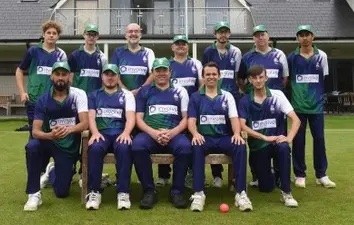
Our courses were going well so we started to think we should set up a regional team. ECAD had recently created regional hubs but with the backing of the Surrey Cricket Foundation, we converted the ECAD South East team into a Surrey team - the first ever county Deaf team. Pretty rapidly our team was playing at Edgbaston in the final of the ECAD national indoor tournament.
I knew Mike O’Mahony who had been involved with ECAD since its early days. He told me that the ECAD-run England Lions team needed a new manager and I offered my services. I took on the role with gusto and set about trying to increase the national squad pool of Deaf cricketers in England, centralising information about playing opportunities and talent pathways. When I started, we had 80 players, many of whom were in the 40s or older. I wanted to bring in much younger players and create a pathway into the England team. When I left ECAD in September 2021, we had over 400 players playing for multiple county teams as other counties had followed Surrey’s lead and set up their own Deaf teams.
I successfully pushed to make ECAD a charity and was its CEO from 2019-21. We ran all the Deaf tournaments around the country, indoors and outdoors. I am hugely proud of this time and was really disappointed when it came to an end.
I started planning how to set up a National Deaf Cricket Centre. One of the issues many Deaf people encounter is social isolation - even to the point where there can be a risk of suicide. I wanted to create a regular contact space where all the regional players could come and bond over cricket. Sadly, the ECAD trustees didn’t share my vision of the Centre and my time came to an end.
I’m often asked ‘why does a Deaf team need to play other Deaf teams as cricket is a visual game?’ But working with Deaf players made me appreciate the aural side of the game. How all cricketers are processing sound clues all the time, judging a catch in the slips, reacting to a ball hit into the outfield, running between the wickets, the reaction of spectators and team communication.
Also, I grew as a coach, as working with people who can’t hear you at all or barely hear you forces you to think of different ways to deliver coaching sessions. You have to be more visual in demonstrations, and as most of the players are lip reading there is no room for mumbled directions or turning your back while talking. I also began to talk more slowly and clearly. I became a better communicator, and a better coach.
Around the time my ECAD journey was coming to an end, we made some great progress working with the ECB, a relationship which hadn’t always been a smooth one. I managed to persuade the ECB to formally include Deaf players within the national Pan Disability Cricket structure, previously a domain for Learning and Physical Disability players only. This shortly afterwards helped spawn the DPL – the Disability Premier League – and more recently the first ever England Pan Disability National Team. The team is returning this week from a tour of India where they won a T20 series 4-1. The Disability Premier League Final is now shown on Sky. Imagine that 20 years ago!
However, I do know that many Deaf cricketers are frustrated with the Pan-Disability development and would prefer to play in a deaf-only team. Cricket is a way to bring like-minded people together and to share stories. In disability these things are even more important.
I am delighted to see ECAD are trying to resurrect a Deaf-only national team with the ECB having now seemingly dropped single Disability teams (other than Visually Impaired which has its own game). I very much hope they can make that a success and compete in future Deaf International Cricket Council (DICC) world events.
For me, Deaf cricket and disability cricket reinforced the same principle that underpins Twenty20 Community Cricket: clear, inclusive player pathways are the key to keeping young people in the game.
Again, the support of the Surrey Foundation was key to the growth of Deaf cricket, and I am proud to still have a strong connection with the county I played for as an under-19 nearly 40 years ago. They’ve always supported me, always listened, and when there’s been synergy between their plans and mine, they’ve come on board.
They were the first county to properly jump on Walking Cricket - which I’ll talk about next time.

