Darren Talbot’s Journey into Inclusive Cricket Part 6
In my twenties my disillusionment with playing club cricket and cricket clubs grew. I still loved the game and would follow the fortunes of England’s very average 90s teams with the same level of fanatical interest as I had always done. I was astounded when I first saw the young Shane Warne and was a big fan of England’s new spinner Phil Tufnell. A slow left armer like me, and possessed with a maverick, rebellious personality that appealed to me. He seemed to dislike all the stuffy nonsense around cricket at the time, as I did and still do.
I kept playing, but in a team that was going downhill. Later on, it made me reflect on how to motivate a youth cricket Academy team when on a losing streak. I was so winning- and results-driven that I stopped enjoying the game. Now I try to convey that the ‘result’ in a match is ‘individual’ not ‘team’. Winning isn’t the focus. We always assign young cricketers match roles in advance - so players and parents know when they’re going to bowl, bat and field. Everyone participates equally. This is not necessarily the most competitive way to structure a team, but it does mean they enjoy the experience more. I’ve actually found that kids these days are not as concerned as adults about winning and losing. They soon forget a defeat - in a way I didn’t. With this philosophy (What we call ‘Daz & Maz ball’) it’s made our teams play with a positive mindset and tends to, as a side product, improve overall team results.
Another factor that depressed me with the club game back then was the accepted prevalence of sledging. Not only did I receive unacceptable sledging, but I would observe young members of my own team verbally abusing the opposition, with no sanction. Because no-one stopped it, it festered. This experience informed the anti-sledging guidelines I helped to draw up for the Surrey Junior Cricket Championship in 2025. This is now in every junior cricket club in the county. I was also the project lead on ‘Inclusion’ for the Championship for a number of years, and I’m now currently working with the Surrey Cricket Foundation on a ‘player behaviour’ guide which should be released imminently.
I stopped playing in my mid-twenties. All along, there was an option waiting for me, I just couldn’t see it.
In 2004 a friend of my dad’s invited me to Lord’s. He was the chairman of Avorians (now Cobham Avorians) Cricket Club. We spent a long time in the Tavern. And then the Long Room bar. And then in the Nursery hospitality areas. He needed the club to set up a junior cricket section from scratch and suggested I should do it. I said yes straightaway. And then when I woke up the next day with a sore head, I was slightly horrified by what I’d agree to. I changed my mind over and over again, until I finally accepted.
This was a pivotal moment in my life. I had no background in coaching so was just making it up on the spot to the 7 kids who had turned up for the first session. But I persevered, achieved my Level 2 ECB cricket coaching badge, and slowly the squad grew. I found I really liked coaching, and what was more I seemed to be good at it! I’d always rebelled politely against my teachers at school, and now effectively, I was one! Albeit in a tracksuit and refusing to be ‘Mr Talbot’. It’s always been “Coach” or “Darren”.
At the same time my work in financial services was very challenging - I was working in a small team under high pressure in a toxic environment, and eventually it made me ill. I started having panic attacks on the train into London, and eventually I couldn’t even get on the train. A kind doctor told me I was in a very bad way, which I failed to recognise fully at the time, and signed me off work for three months. I realised I couldn’t go back. I negotiated an exit, had a few shares and a payout I could live off for a while, but no plan. As a result of this period, mental health - especially for cricketers - has continued to be an interest of mine, so much so that as a Councillor for Epsom & Ewell Borough Council, I am a Mental Health Champion.
Slowly I started to put together a business idea: kids had been having football themed parties for years, but I couldn’t see anyone offering ‘cricket birthday parties’. Gradually I gathered clients. I also started coaching for the ECB’s Chance to Shine schools’ cricket programme, set up to encourage state schools’ cricket. My very first session was at George Abbot School in Guildford with 30 girls. I had never worked in a school before, and I had never coached girls. But again, I found both very rewarding.
As I coached in schools around Guildford, I realised how bad a situation state school cricket provision was in. Us Chance to Shine coaches would deliver a few sessions in a school and hoped the progress would continue but it rarely did. It was as though we were just ‘dropping in’ as a diversion rather than agents implementing long-term change. What was missing was a genuine youth cricket pathway, a connection between the schools, the kids and local clubs. I saw there was a gap there and decided I’d try to work with state schools, upskilling teachers, and bringing local clubs into the loop.
I did this for ten years but eventually concluded that it is just too difficult within schools to achieve the results for the kids that we wanted. The schools just did not have enough time or resources or in many cases, true passion to make it work.
So, I decided to set up community cricket hubs outside of school and coach the kids there.
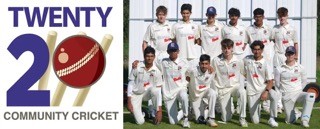
And so, in 2017, the Twenty20 Community Cricket Academy started to take shape.

