Darren Talbot’s Journey into Inclusive Cricket Part 5
Fast Bowling Workload, Injuries and Finding Purpose in Cricket
I am delighted that my former Surrey Under 19 cricket squad-mate - and Ashes-winning left arm spinner - Ashley Giles responded to this Blog on LinkedIn. It may surprise people to know that back then, rather than holding up an end for hours whilst the quicks did damage, Ashley himself was a very decent left arm fast bowler. He commented that he remembers bowling a huge amount of overs for school and Surrey in his teens and that eventually this led to back problems. So, he converted to spin bowling and the rest is history.
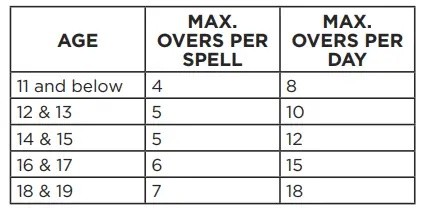
These days, there are ECB fast bowling directives in place which significantly reduce the chance of a young fast bowler suffering from premature wear and tear. Ironically for Ashley this injury, a product of over-bowling, is probably what turned him into an international cricketer.
The ECB set limits on how many overs young bowlers can bowl in each match, and yet we still seem to have the same problem, which extends to the recent Ashes Test series: our frontline fast or medium fast bowlers - Mark Wood, Jofra Archer, Gus Atkinson and even Ben Stokes all suffered injuries during the series that meant their involvement was reduced. By the final test in Sydney, our 8th choice seamer, the unfortunate Matt Potts was drafted in. His lack of match practice showed, and the Aussies hammered him for 0-141 in the 1st innings. He didn’t bowl in the 2nd.
So, if the ECB directives are in place and young fast bowlers are now less likely to become injured why are our elite bowlers sustaining such significant injuries?
I think part of problem is that good teen players play and train across multiple, unconnected teams – school, club, county, academies. Clubs want to win matches so if they’re the premium seamer in their age group, team managers will want them to bowl their permitted overs. And if the bowler is good, it’s likely they’ll be playing three or more matches a week, including turning out for a senior squad at the weekend. This is a lot of fast bowling workload for youngsters. Many parents of young cricketers are unaware of these issues (not being from cricket backgrounds) and we spend a lot of time educating them about this, as they are the only people across all of their son or daughter’s cricket activities.
Why do Australian and South African bowlers seem more robust? I think it’s maybe about the greater emphasis on sporting culture and the outdoor life in those countries. With such better weather kids are brought up outdoors - surfing, swimming, playing impromptu games of rugby or cricket all year round. There’s a physicality to young South African cricketers for example that in England we lack.
Perhaps our terrible weather, which forces young cricketers to train for half the year on hard indoor or concrete training surfaces is a factor? I don’t know, but it’s important that coaches and parents spot warning signs of undue strain early on.
Being a slow bowler and usually fielding at slip I didn’t suffer any notable injury and in my early twenties immersed myself in club cricket - first at East Molesey, then Walton-on-Thames.
After a few years though, I started feeling disillusioned. I had always been ultra-competitive, and I found I had lost my motivation, my reason for playing which was to succeed and go places; when I knew that wasn’t going to happen with Surrey I lost the bug. I didn’t train or put effort into it and by then there were other distractions; I just didn’t want to work as hard as I needed to.
Oddly, I could still turn in the performances. I ended up playing for Dover CC as my girlfriend at the time lived there. In the previous season future Aussie great Justin Langer was their overseas pro so the standard had been high. I still bowled well - I remember in first game I scored 40 odd and bagged a few wickets. But as the seasons rolled on, the team worsened; the catches started to go down as did team morale. If you’re a bowler, you need to be in a good team to bowl consistently well.
I had also started working in the City by then in a high-pressured financial services job and was knackered by the weekend so had to force the effort to play.
Further, I had a bad experience when I was playing for a club in the North Surrey area. In my second year there, the members decided to sell the ground. I was part of a group that tried to keep it going. But the long-time members wanted to sell to developers. All members got a sizeable cut of the profit. Even I received a few grand which benefited my student lifestyle albeit reluctantly! Those that had been there 30 years must have made a small fortune. But the club could - and should - have survived. It was part of the community. This really demoralised me. I started to feel I’d had enough with cricket clubs.
I hadn’t fallen out of love with cricket, but I was certainly fed up with playing it.
Some days I woke up and didn’t want to play, which I’d never felt before; I’d been so competitive and not playing at the peak that I’d reached made me feel purposeless.
It was only by becoming a cricket coach that I realised that was my purpose. This is what I should have been doing all along.

