Darren Talbot’s Journey into Inclusive Cricket Part 3
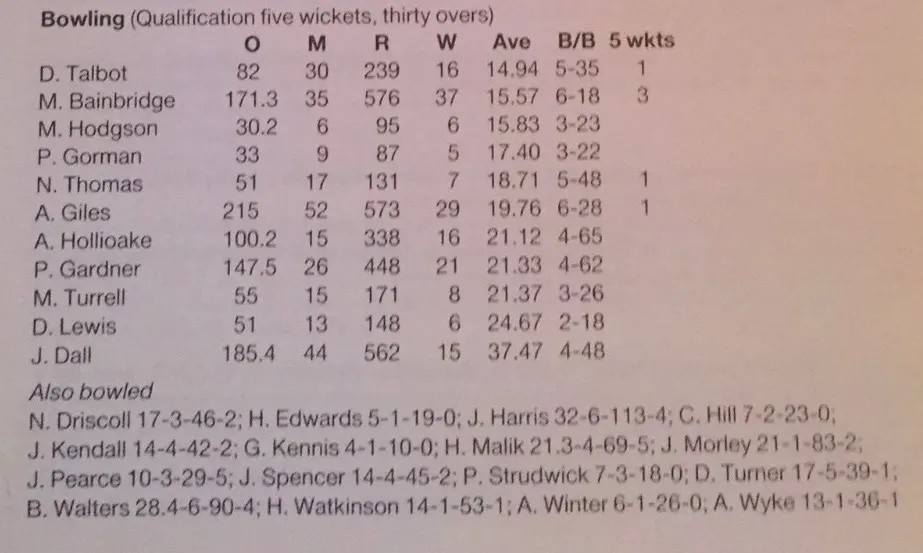
In the summer of ’87, when at 16 I first got into the school cricket team, I did extraordinarily well. I broke the post-War records for wickets which I think still stands, achieved the second-best bowling figures in the school’s history and was opening the batting as well. I took 100 wickets in the season for school and club - that was the big breakthrough. And then suddenly I was playing Surrey age-group cricket! I’d given up hope of this ever happening as I’d failed the trials more than once, but I happened to be playing in a school match where the manager of the other team was one of the Surrey Youth team coaches. At tea he took me aside and asked, “have you thought about playing for the county under 19s?”
I was sent a team sheet for the summer county matches, and I had been picked in almost all the games. Sadly, many of the games were rained off - it was terrible weather that summer. In many ways I was unlucky - I was so good at that point. If I’d played all those scheduled matches and done well, things could have been very different. Graham Thorpe was captain of the team, which included Mark Butcher, Adam Hollioake and Alistair Brown. Martin Bicknell had leapfrogged us all and was already in the 1st XI. Eventually I played in the Surrey Young Cricketers after 3 years in the Under 19s.
So, what was the difference between them and me? I think they all had a different ingredient I didn’t have: they all were more confident of their abilities. Technically I’d like to think we were more or less on a level, but that only takes you so far as you also need mental toughness. Just look at the different attitudes of the two teams in the recent Ashes series: the more experienced Australia team had a mental edge over England throughout.
To this day I see players from private schools with an attitude that I lacked. It’s a borderline arrogance, or rather they’re supremely confident in their talent. It also helps if you’re naturally strong and tall! This seems to give you an innate confidence. Counties are looking for very tall players - especially bowlers. When I walk past players like Josh Hull, Josh Tongue and Craig Overton - like I often do at The Oval - I realise what massive physical specimens they are!
By summer ’89 I was top of the Surrey bowling averages - above future England bowlers Ashley Giles and Adam Hollioake - but I was always so nervous before each game, almost to the point of not wanting to play. To this day I still have these anxieties - even if I play a game of indoor cricket amongst friends in Vienna. His system is far from perfect, but Brendon McCullum is fantastic at giving his players confidence and freedom. It all came unstuck in Australia but had worked up until then. Imagine what Graeme Hick and Mark Ramprakash - two brilliant county batters who underperformed for England - could have achieved in the Bazball environment. They were messed about - super talented guys who were mismanaged and who needed their confidence boosting.
This has informed the way I coach – grassroots cricket clubs are often dominated by children from independent schools. Often the manager of the team is the captain’s dad and his mates become the core of the side. It’s sometimes hard to build up a state school child’s confidence in this environment - they’re batting against a lot of engrained privilege here. And yet non-private school kids are more likely to remain in their home areas and eventually play for their local adult cricket teams long-term. So, it’s self-defeating for clubs to invest in private school kids at under 11 or under 13 just to win tournaments as down the line they don’t have so many good players. We are working with clubs, encouraging them to retain the less privileged children to better the club long term.
In our cricket coaching, it’s crucially important to us that in every match everyone in the team is doing something that they’re already good at or focussing on an area of their game that needs some work - to build up their confidence. In our games and training everyone has a role, winning isn’t the primary motivation and everyone gets an opportunity to do something every game. If you’re batting at 11, you’re going to bowl 3 overs at the start.
To this end, we co-created a course on confidence building in and outside cricket, initially for our Academy players, with a mental health organisation called Braver Minds. It went really well last year, and we are looking to run it again soon.

