Darren Talbot’s Journey into Inclusive Cricket Part 11
A major part of what I do is working with cricket clubs to help them develop and grow. I know how to help a club solve their problems and especially how to start and grow a junior section. I feel the unusual set of diverse influences in my background has made me very good as a sort of ‘benevolent troubleshooter’ - like a padded-up Gordon Ramsay, but without the cynicism and (usually) the swearing.
I played cricket to a high level and then I worked in the finance sector for 13 years after a Business degree. I never imagined that the skills I’d picked up from both contrasting sides of my life would give me a unique perspective on club cricket.
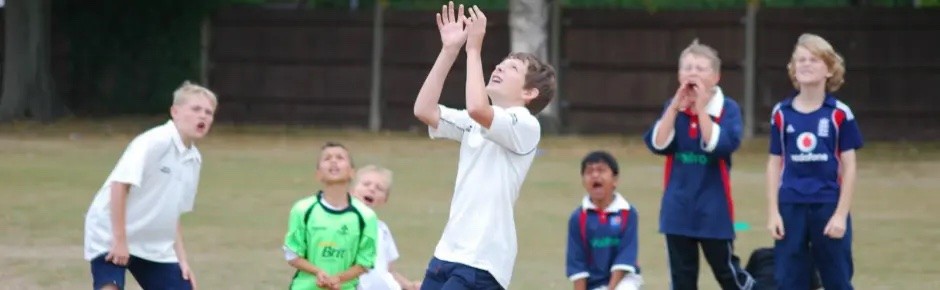
It all started when I was thrown in at the deep end when asked to create a junior section at Cobham Avorians in 2004. I had to learn quickly and apply what I’d garnered from both my cricket and corporate worlds. Having made it work at Avorians, I then applied the same model to other clubs and soon built up a large bank of experience. I was amazed that rapidly I was effectively using skills I didn’t even know I had and applying business models to local clubs. At Weybridge CC I was brought in as they were losing kids each year. By reorganising the model and bringing in skilled coaches we increased the junior membership threefold to 520, creating, over the course of seven years, one of the largest junior sections in the country. Nowadays we focus our efforts at committee level rather than supplying coaches.
In the early days I was on the committee of the Surrey Coaches Association - and I used to travel to clubs and sit down with committees to discover what their challenges are. Once you have a Surrey badge on your tracksuit, people seem to open up to you! I realised that many clubs have similar problems and it became obvious I could help them beyond coaching.
At its core, a local cricket club is a community of volunteers. Often these volunteers do not have the time or direct experience to be able to sort many problems out. Sometimes the same people have been running the club for years and new ideas and people are needed. Often younger members see the committee environment as dull or for older people. All these perceptions can be challenged - it’s all about volunteer management - about getting the right people in the right place. In some cases, moulding the role around the individual. A parent or player may not want to talk budgets at the AGM but be an expert at social media and be able to help in that way.
It’s curious that it tends to be busy people – business owners or senior City folk – who help run cricket clubs, but that comes with its own challenges. These people are often used to having their own way or pushing through decisions in their day-to-day life and can bring that to cricket clubs without actually having all the necessary knowledge. Their passion and drive are invaluable but sometimes they need sense checking and, being an outsider, I can often challenge more easily than their fellow committee members.
It’s also important to examine how the committee structure could be made more efficient: some clubs have up to 20 people sitting on the committee (I’ve seen this more than once!), meaning that decision-making is painfully slow as full attendance at meetings is rare. Decisions are constantly being undone and nothing changes. Everyone needs to be assigned a clear role - chair, safeguarding officer, head of senior cricket, head of junior cricket, events organiser, etc. Then create sub-committees to encourage wider member involvement. I fully respect anybody who wants to put in hours as a volunteer to help their cricket clubs. This is not a city corporation where people should be fired. But there are ways to bring the best out of people.
The bar can be a great source of income and clubhouses are often under-utilised. As our youth cricket was starting to be successful at Old Woking, I realised there were loads of parents hanging around who might be tempted to buy teas, beers or even snacks. I bought a toastie maker and my daughter and I ran a snack shack for a test period - specialising in cheap to make (but delicious) cheese toasties. The toastie maker with the newly opened midweek bar, ended up pulling in over £1,000 a year of extra income and now the menu has increased to all-round café fair with double air fryers!
I’ve learned to expect the unexpected as different clubs have unlikely needs: whether it’s pitch issues like watering challenges or even finding new grounds, local planning restrictions, being part of a sports club which doesn’t actually prioritise sport (oddly frequent), I stay open and adapt to each club’s needs.
A key strand we encourage is to link up with local state schools - seeding the junior sections with local state school kids. Once word gets around in the wider community that the coaching is good the section grows even more.
I blend business, corporate structure and years of cricket experience and personality, all augmented by my links to the Surrey Foundation and other cricket boards. We can adapt to each club’s needs, identifying and carefully motivating people to do the job they might not initially think they are able to do and be there to support. Some clubs you can turn around quickly, for others it takes 5 years or more - it’s all about finding the right people. For most projects, I tell clubs it’s a 3-5 year plan from the outset to reach some of their targets. Parents with no cricket background want to get involved and can bring skills and knowledge from way beyond traditional local cricket. Identifying and encouraging these people is what we do very well.
What were the skills I discovered in myself? When I was younger, I’d always thought of myself as a shy, introverted, only child who didn’t want to mix with people if avoidable. It was fundamentally a confidence thing. I remember feeling very intimidated at Ashford CC - one of the first committees I hooked up with, through no fault of theirs. But the more I did it, the more confident I became. Not only have I personally grown, but I want to use my experience to add value to as many clubs, kids, parents and volunteers as possible; I want to pass on what I’ve learned. I’ve become very good at staying calm and listening. Often if there’s a problem people want to rant, to tell you why they’re frustrated. But there’s always a solution, always a way of talking to someone if you’re calm. In the City I frequently dealt with very confident, very difficult people. It often wasn’t pleasant, but it did teach me how to work with all characters effectively. It’s much easier working with volunteers - as long as you respect that they are freely giving up their time.
At times I struggled to enjoy my finance sector job, but it did give me the skills I have been able to apply to my cricket work: I came to cricket coaching already expert at advertising, IT, risk analysis, investment structures… I also loved the spreadsheet skills I learned there - which has been the glue to many things I’ve done in the cricket world.
At the age of ten I was obsessed with stats and created my own cricket tournaments with arcane rules. I was creating spreadsheet models then to run my imagined leagues. Now I do it for real!
If your club needs some help with restructuring or innovation do get in touch with our team. As each club has different needs, we are very happy to agree a working arrangement that suits both parties and doesn’t cost your club money it doesn’t have. One new junior member can be worth well over £1,000 to a club in their lifetime so the value of even the simplest growth can be much bigger than is first appreciated. We’ve helped clubs increase junior sections, improve structures and unlock new income streams — often far beyond initial expectations.
We are always in the first instance very happy to chat - we are genuinely passionate about growing club cricket and have built up a huge amount of experience doing so.

